

One common misconception among privacy-minded users is that choosing a “privacy wallet” automatically makes every transaction untraceable. That belief confuses protocol-level privacy features with operational security, network-level anonymity, and the limits of cryptography. In practice, anonymity is an ecosystem property: wallet design, network routing, coin-selection, and user behavior all matter. This article breaks down how wallets built for privacy — with a focus on Monero (XMR) and multi-currency tools — produce anonymity, where the gaps are, and how to choose operational trade-offs if you live in the United States and want serious, practical privacy.
We’ll use concrete mechanisms — ring signatures, subaddresses, Tor/I2P routing, coin control, shielding, MWEB, and hardware isolation — to compare common approaches and show a decision framework you can apply. The goal isn’t to sell a product but to equip you with a repeatable mental model so you can evaluate wallets and reduce specific risks in your day-to-day use.
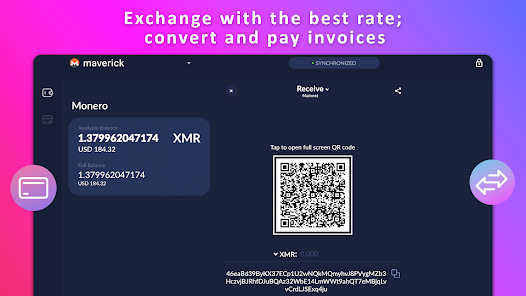
Mechanisms: how privacy features map to real protection
Privacy wallets defend anonymity at three layers: protocol, network, and device. At the protocol layer, Monero uses ring signatures, stealth addresses and confidential transactions to hide amounts and sender/recipient linkages by default. Bitcoin lacks those primitives, so privacy relies on techniques such as PayJoin (which obfuscates which UTXO is the payment), Silent Payments, and manual UTXO coin-control. Zcash provides shielded addresses that can hide metadata, but leaving funds on transparent addresses defeats that advantage unless mandatory shielding is enforced.
Network anonymity hides where requests originate. Tor-only modes and I2P proxies prevent your IP from being visible to public nodes or explorers. Wallets that let you connect to custom nodes or use Tor reduce the risk that chain analysis firms or ISPs can pair a transaction with your IP address.
Device and custody protections determine whether keys or view keys leak from the device. Hardware-backed encryption (Secure Enclave on iOS, TPM on Android), a short PIN or biometrics for unlocking, and non-custodial design (keys never leave the device or the paired hardware wallet) limit compromise vectors. Air-gapped signing with a dedicated device takes this further: it eliminates online key exposure at the cost of convenience.
Comparing approaches: Monero-native anonymity vs. Bitcoin privacy tooling
Monero-first wallets offer privacy as a baked-in property. The wallet-level protections that keep your private view key local, support subaddresses for one-time receipt addresses, and background sync make linkability far harder by default. For users who prioritize opaque transaction histories with minimal configuration, Monero is the easier path: the anonymity set is provided protocol-side, so you don’t need to perform complex coin-splits or join mixing services.
Bitcoin privacy requires active steps. PayJoin v2 and Silent Payments change the transaction structure so observers can’t easily tell which inputs funded which outputs. Coin control and batching reduce address reuse and prevent small-change leakage. But these methods are not universal: they depend on counterparty support (PayJoin needs the receiver to cooperate) and on safe operational habits, like avoiding address reuse and avoiding centralized custodians. They can approach strong privacy when combined with Tor and hardware keys, yet they remain fundamentally different from Monero’s default opacity.
There are also hybrid scenarios: wallets that support many coins let you hold Monero alongside Bitcoin and use built-in swaps to move between privacy regimes. Decentralized routing methods can help swaps avoid centralized custodians, but every cross-chain operation introduces metadata (the timing and amounts of swaps) you must consider.
Trade-offs and limits you should know
No single wallet or feature fully eliminates risk. Here are the major trade-offs and boundary conditions:
– Convenience vs. safety: Air-gapped hardware and mandatory Tor routing are strong protections, but they reduce convenience and increase the chance of user error at setup. Conversely, using the wallet’s built-in exchange or instant swaps conveniences may expose timing or amount correlations to market makers unless the routing is decentralized.
– Protocol limits: Coins like Monero and LTC with MWEB provide strong on-chain privacy—but they do not hide network metadata unless paired with Tor/I2P. Zcash shielded transactions are powerful, but leaving funds or change on transparent addresses nullifies the benefit unless the wallet enforces shielding by default.
– Operational leakage: The private view key not leaving the device is a real safeguard, yet backups, accidental screenshots, or compromised companion apps can leak data. Zero-telemetry policies reduce developer-side risk, but they don’t protect against endpoint compromise or social-engineering attacks.
– Migration and compatibility: Some migrations are nontrivial. For example, Zashi wallet seeds are incompatible with certain ZEC implementations due to change address handling; users must manually transfer funds in such cases. Always research migration limits before consolidating balances across ecosystems.
Risk management: a practical decision framework
When choosing a privacy wallet and configuring it, use this heuristic: Threat × Capability = Prioritized Controls. Identify the adversary (casual chain analysis, an ISP, a forensic firm, or a hostile state), estimate their capability (network surveillance, subpoena power, node-level observation), and deploy controls that measurably reduce that capability.
Examples:
– Casual observers: Use subaddresses, avoid address reuse, and enable background sync and subaddress generation for Monero. These are low-friction steps with large gains.
– Network-level observers or ISPs: Use Tor-only mode or I2P proxy support, operate custom nodes, and avoid mobile data when making sensitive transfers. Tor reduces IP correlation but introduces guard-node heuristics you should understand.
– High-capability forensic teams: Combine hardware wallets, air-gapped signing, non-reuse of addresses, and conservative operational discipline (e.g., delays between swaps and outgoing spending). Accept the convenience cost because it measurably shrinks attack surface.
Where wallet features support these controls — device-level encryption (Secure Enclave, TPM), non-custodial key storage, mandatory shielding for ZEC, MWEB for LTC, and hardware integration — you can construct layered defenses. A multi-currency wallet that offers these options lets you adapt protections per asset rather than force a one-size-fits-all compromise.
Operational checklist for U.S.-based privacy-minded users
– Enable device-level encryption and use biometric/PIN lock. Back up seed phrases securely offline.
– Prefer wallets that keep private view keys on-device for Monero and enforce shielding for Zcash to avoid transparent leaks.
– Use Tor-only mode or I2P for network-level anonymity and consider running your own node when feasible.
– For Bitcoin, prefer wallets with PayJoin v2 and Silent Payments; use UTXO coin control to avoid linking unrelated inputs.
– Treat built-in swap services as metadata-generators: use decentralized routing (where available) and stagger swaps when adversarial timing correlation is a concern.
For readers who want a practical starting point, explore wallets that combine protocol-native privacy (Monero), strong network anonymity (Tor/I2P/custom nodes), hardware-backed keys, and a strict no-telemetry stance. That combination reduces broad classes of risk while keeping you in control of keys and operational choices. One wallet that packages many of these capabilities and multi-currency support is cake wallet, which integrates Monero features, BTC privacy tools, Tor/I2P options, hardware integration, and a zero-data-collection policy — though you should still practice the operational disciplines above.
FAQ
Q: If I use a privacy-first wallet, am I anonymous by default?
A: Not automatically. Protocol-level privacy (like Monero’s ring signatures) gives strong default opacity, but network-level metadata (your IP) and operational mistakes (address reuse, backups that leak keys) can deanonymize you. Treat wallets as tools that need configuration and disciplined use.
Q: How important is Tor or I2P?
A: Very important if your adversary can observe your network traffic. Tor-only or I2P proxies hide the IPs that first touch transactions. However, Tor introduces its own operational nuances (exit and guard node patterns) — it’s powerful but not a cure-all.
Q: Are built-in swap services a privacy risk?
A: They can be. Swaps create timing and amount correlations unless routed through decentralized markets or split across multiple providers. Decentralized routing reduces central points of observation but doesn’t eliminate metadata entirely.
Q: Should I use a hardware wallet?
A: Yes, when adversary capability is high or you store significant value. Hardware wallets and air-gapped signing reduce online key exposure. The trade-off is convenience and the need for careful physical custody.
Q: What’s the single biggest operational mistake to avoid?
A: Address reuse. Reusing addresses across transactions or across chains creates obvious linkages that defeat most privacy measures. Generate fresh subaddresses where supported and use coin control for UTXO-based coins.
Final takeaway: anonymity is an attribute of a practiced workflow, not a toggle. Choose wallet features that cleanly map to the threats you face, combine network and device protections, and accept a few deliberate trade-offs in convenience for measurable reductions in risk. Watch for changes in protocol support, migration incompatibilities (like certain Zcash seed issues), and evolving surveillance tactics; those are the signals that should prompt you to adjust your setup.